Overview
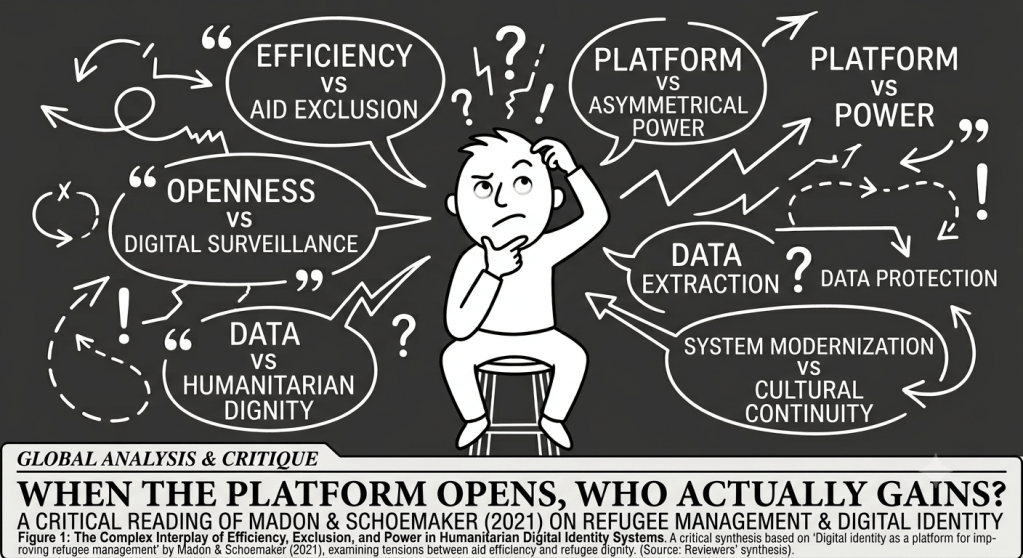
Most digital platform literature assumes commercial markets with willing, sovereign customers. But how does platform architecture behave when users cannot leave, negotiate, or monetize their own assets? This critique analyzes Madon and Schoemaker’s (2021) study on UNHCR’s PRIMES platform to demonstrate why technical openness in non-market Information Systems redistributes power rather than equity.
What the Paper Says
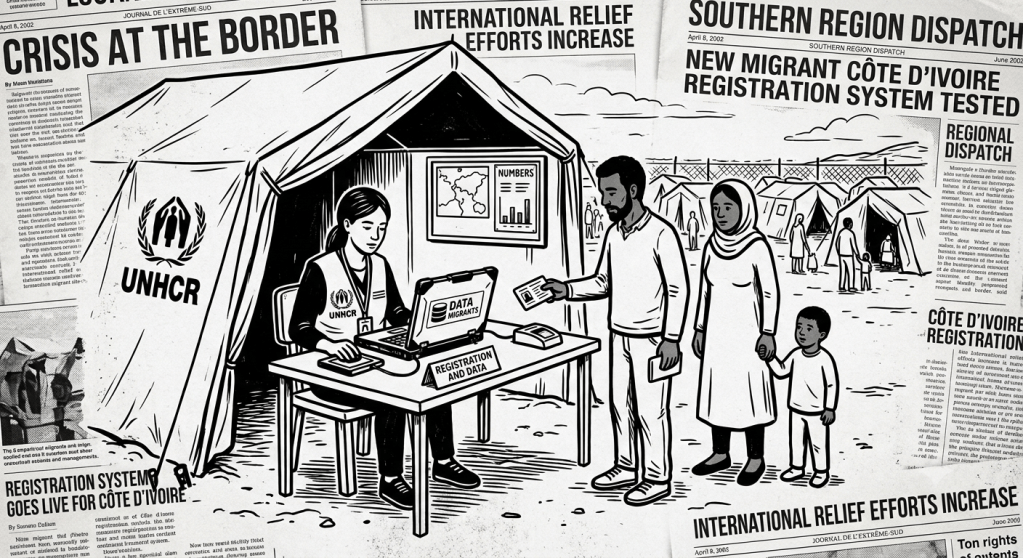
Madon and Schoemaker (2021) examine PRIMES, the UNHCR’s Population Registration and Identity Management Ecosystem in Uganda’s Bidi Bidi camp. Designed as a closed identity loop, UNHCR planned to open PRIMES to third-party NGOs, mobile operators, and banks. The authors analyze this transition across three dimensions: identification, value creation, and governance.
Their findings show that platform openness creates clear operational value for UNHCR and cash-transfer vendors through reduced logistics costs. However, value creation for refugees is not automatic:
- Systemic Disconnects: Portable digital education credentials delivered zero value due to unaligned national accreditation standards.
- Incentive Barriers: Partner NGOs refuse data-sharing to protect market share in competitive delivery contracts.
- Socio-technical Risks: Institutional categorizations like “female head of household” unlocked rations but triggered domestic violence upon husbands’ arrival.
What Other Publications Say
Broader Information Systems research confirms that platformization in vulnerable contexts carries structural risks. Bonina et al. (2021) emphasize that digital platforms for development require aligning architecture with local socio-technical realities, rather than enforcing top-down technical openness.
Where Madon and Schoemaker see potential value, Masiero and Arvidsson (2021) document “degenerative outcomes” in India’s Aadhaar platform, where rigid digital identity systems led to welfare exclusion and food insecurity. Similarly, Weitzberg et al. (2021) argue that humanitarian identity platforms operate on a fine line between recognition and digital surveillance. Madianou (2021) labels this dynamic “technocolonialism,” where platformized data extraction primarily benefits international agencies and private vendors rather than displaced populations.
What I Say
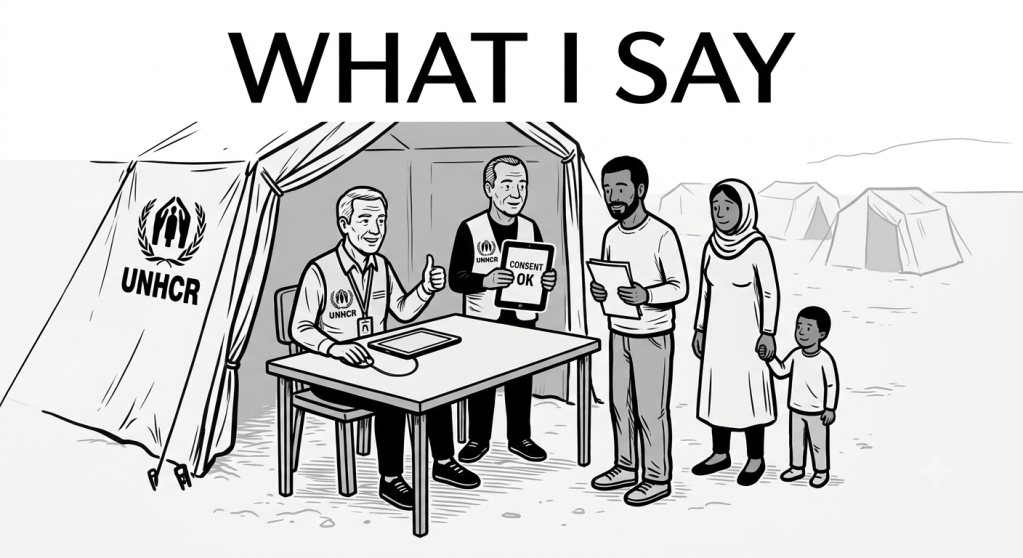
The paper’s core strength lies in refusing the “efficiency reflex,” proving that identical system decisions yield asymmetrical outcomes across stakeholders. However, I push back on three methodological limitations:
1 – Temporal Gap: Data from 2018 refugee focus groups is combined with 2020 stakeholder interviews without addressing potential systemic shifts over those 2.5 years.
2 – Empirical Base: The governance argument regarding private-sector integration relies on only two telephone interviews, under-representing commercial actors’ constraints.
3 – Contextual Isolation: Unlike Masiero and Arvidsson (2021), who compare two Indian states to isolate platform mechanics, Madon and Schoemaker’s single-case design makes it hard to distinguish platform architecture effects from Ugandan administrative specifics.
Conclusion
Opening an Information System inherently redistributes power toward stakeholders best equipped to act on data. In humanitarian digital transformation, technical interoperability cannot fix structural inequality—openness is fundamentally an architecture of governance, not just code.
References
- Bonina, C., Koskinen, K., Eaton, B., & Gawer, A. (2021). Digital platforms for development: Foundations and research agenda. Information Systems Journal, 31(6), 869–902. https://doi.org/10.1111/isj.12326
- Madianou, M. (2021). Nonhuman humanitarianism: When ‘AI for good’ can be harmful. Information, Communication & Society, 24(6), 850–868. https://doi.org/10.1080/1369118X.2021.1909100
- Madon, S., & Schoemaker, E. (2021). Digital identity as a platform for improving refugee management. Information Systems Journal, 31(6), 929–953. https://doi.org/10.1111/isj.12353
- Masiero, S., & Arvidsson, V. (2021). Degenerative outcomes of digital identity platforms for development. Information Systems Journal, 31(6), 903–928. https://doi.org/10.1111/isj.12351
- Weitzberg, K., Cheesman, M., Martin, A., & Schoemaker, E. (2021). Between surveillance and recognition: Rethinking digital identity in aid. Big Data & Society, 8(1). https://doi.org/10.1177/20539517211006744
 bramssamap-ldpfx
Leave a comment